
COT Report: CAD Speculator Bets up strong for 2nd week. JPY rises on BOJ Intervention
Here are the latest links to our coverage of the Commitment of Traders data changes. Data updated through April 28th.

COT | Data | Leaders | What is COT? | Excel
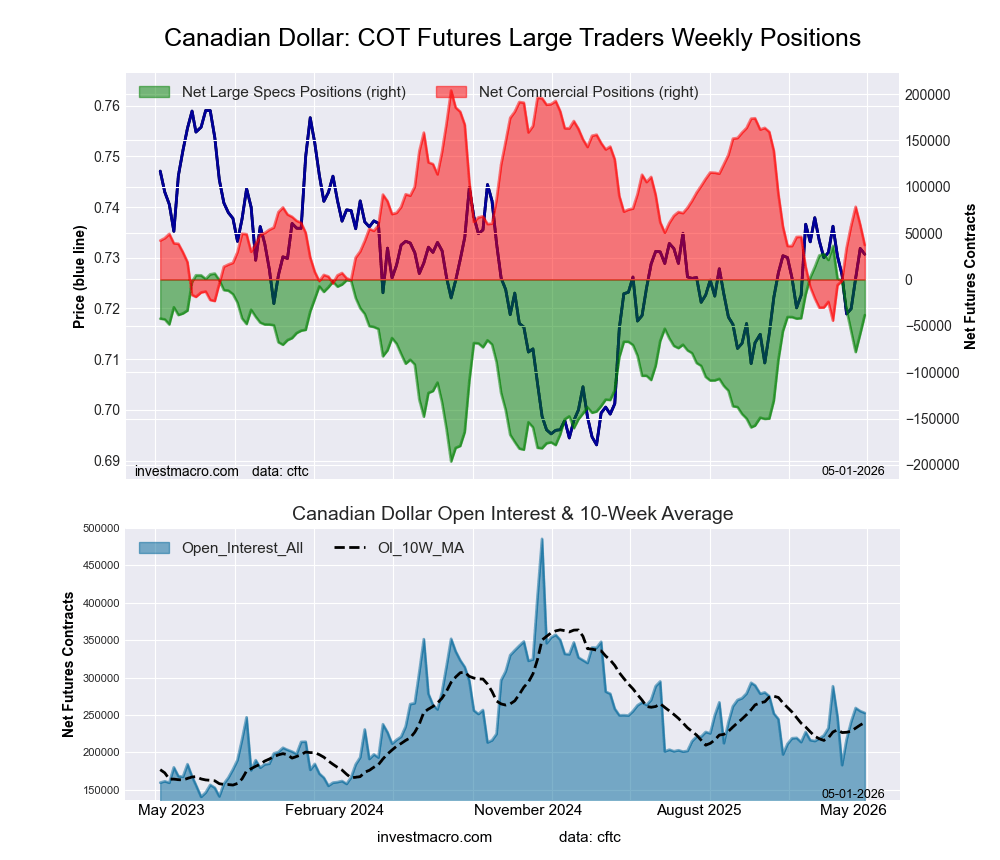
Canadian Dollar Speculator Bets up strongly for 2nd week as CAD price gains for 4th week
The COT currency market speculator bets were overall slightly higher this week as six out of the eleven currency markets we cover had higher positioning.
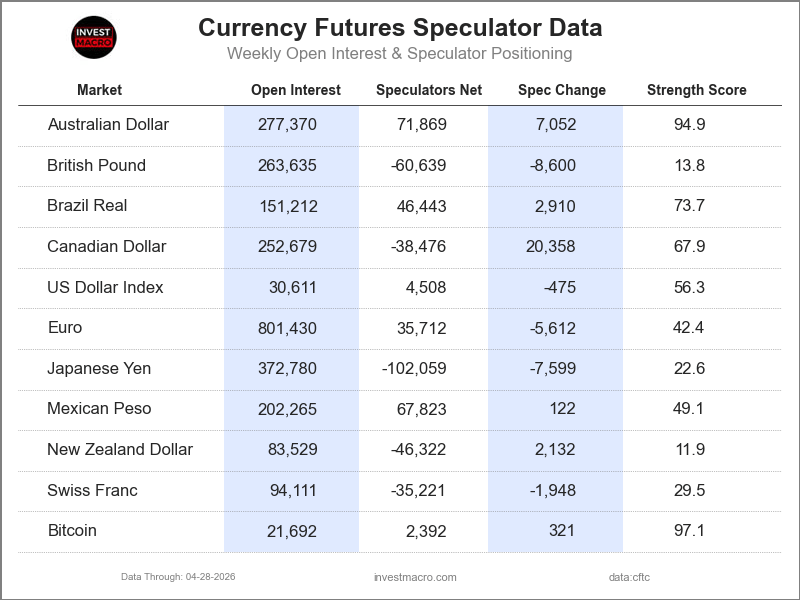
Leading the gains for the currency markets was a jump by the Canadian Dollar (20,358 contracts) with the Australian Dollar (7,052 contracts), Brazilian Real (2,910 contracts), New Zealand Dollar (2,132 contracts), Bitcoin (321 contracts) and the Mexican Peso (122 contracts) also showing positive weeks.
The currencies seeing declines in speculator bets on the week were the British Pound (-8,600 contracts), the Japanese Yen (-7,599 contracts), the EuroFX (-5,612 contracts), the Swiss Franc (-1,948 contracts) and with the US Dollar Index (-475 contracts) also registering lower bets on the week.
Weekly Market Price Changes
WTI Crude Oil, Gasoline & Sugar lead weekly price gains
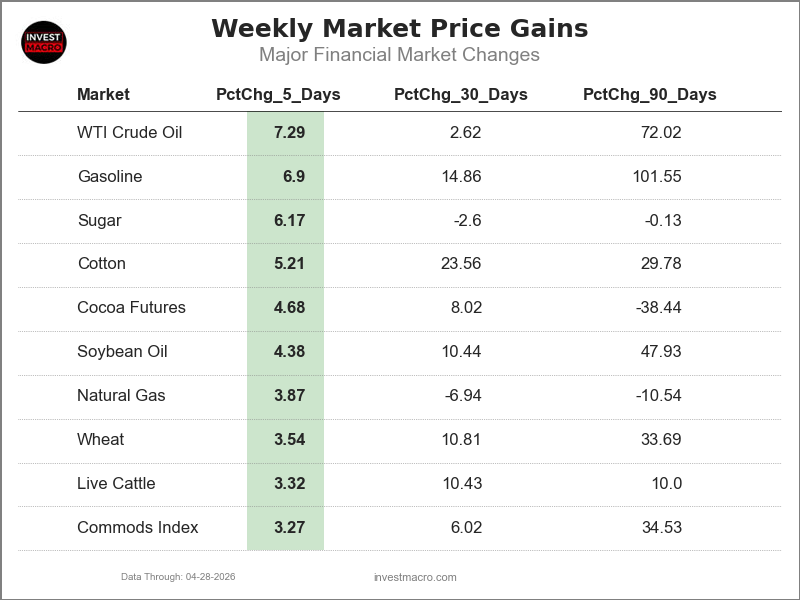
VIX, Gold & Copper lead the price declines
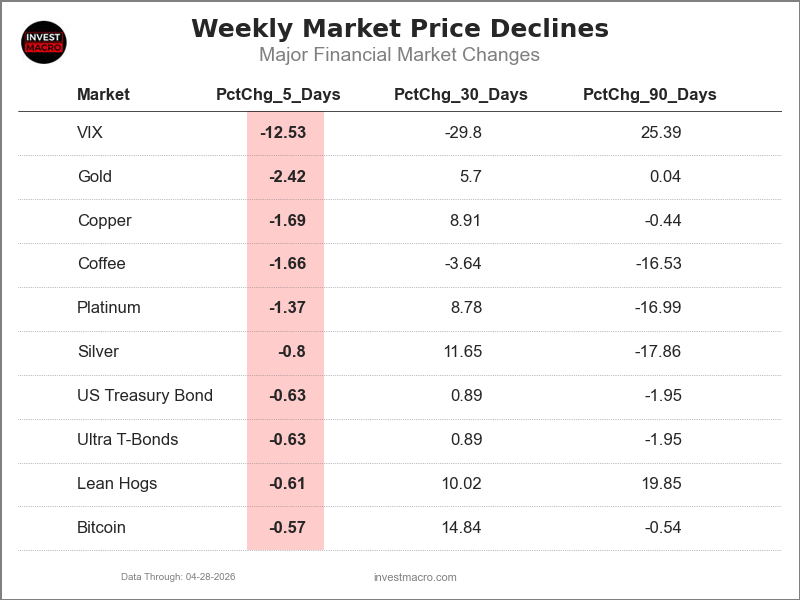
See Weekly Price Changes for major markets and their performance.
COT Speculator Extremes
Speculator Extremes: Soybean Oil, Wheat & Ultra 10-Year Bonds lead Bullish Positions
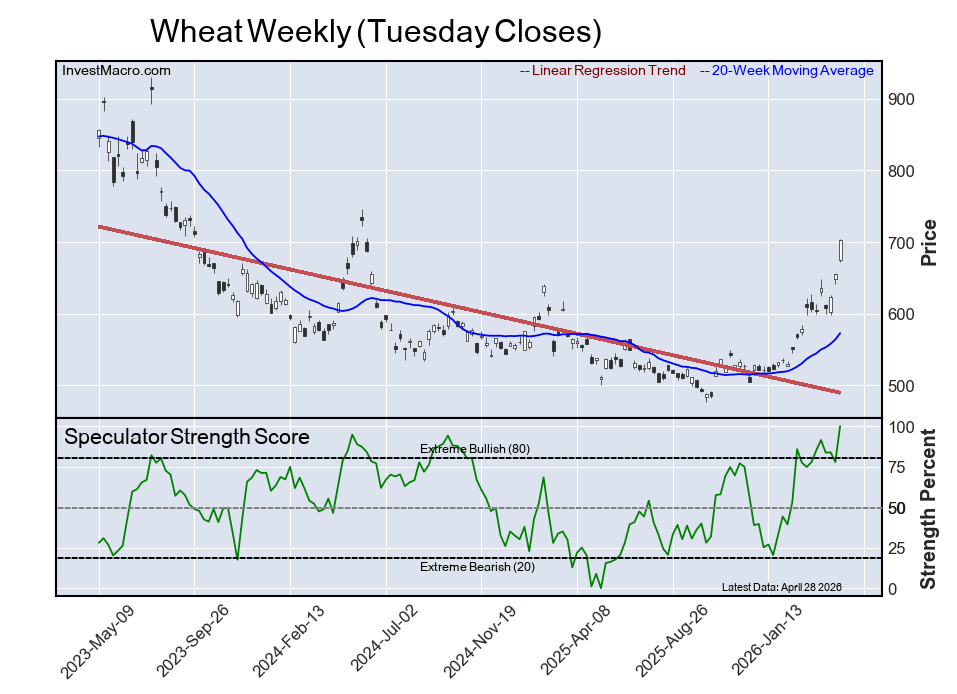
This weekly Extreme Positions report highlights the Most Bullish and Most Bearish Positions for the speculator category.
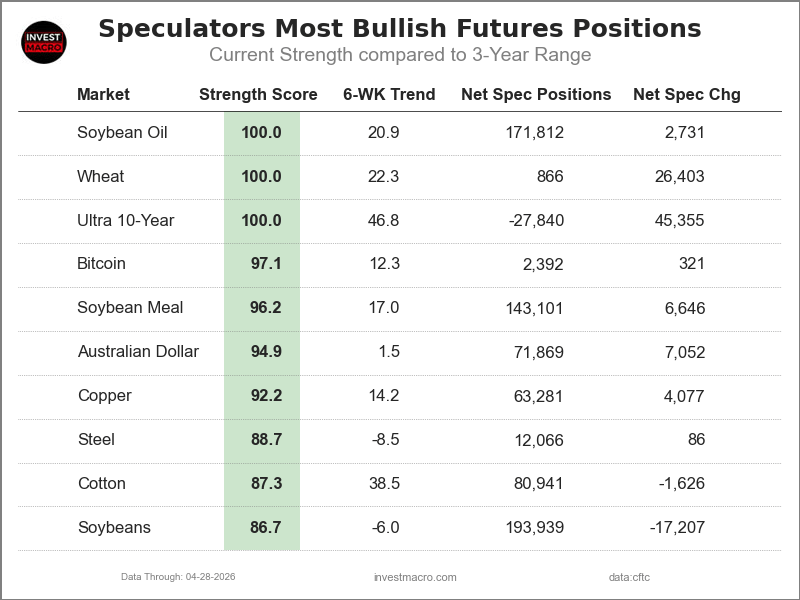
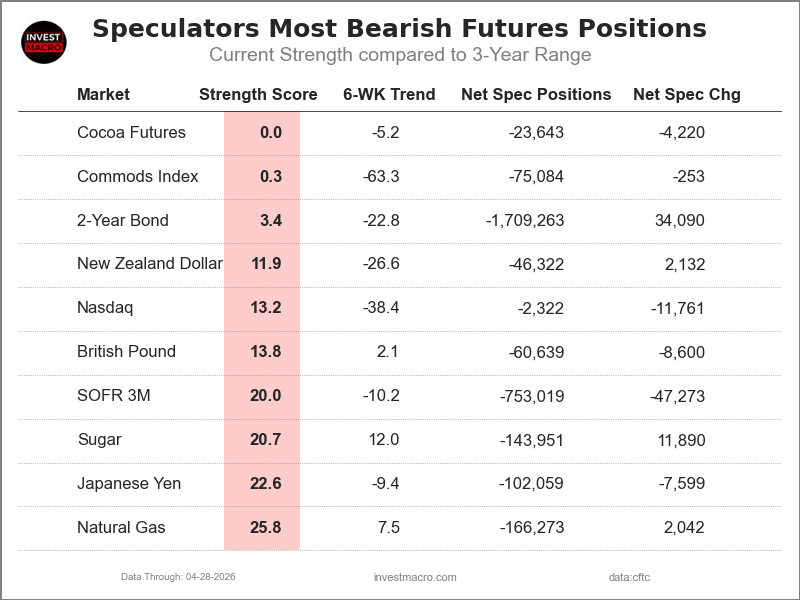
To signify an extreme position, we use the Strength Index (also known as the COT Index) of each instrument, a common method of measuring COT data. The Strength Index is simply a comparison of current trader positions against the range of positions over the previous 3 years. We use over 80 percent as extremely bullish and under 20 percent as extremely bearish.
Have a Wonderful Trading Week
By InvestMacro.com
*COT Report: The COT data, released weekly to the public each Friday, is updated through the most recent Tuesday (data is 3 days old) and shows a quick view of how large speculators, non-commercials (for-profit traders), commercial traders and small traders were positioned in the futures markets.
The CFTC categorizes trader positions according to commercial hedgers (traders who use futures contracts for hedging as part of the business), non-commercials (large traders who speculate to realize trading profits) and nonreportable traders (usually small traders/speculators).
Find CFTC criteria here: (http://www.cftc.gov/MarketReports/CommitmentsofTraders/ExplanatoryNotes/index.htm).